A Site-Specific Art Installation Where Architecture, Materiality and Climate Awareness Intersect
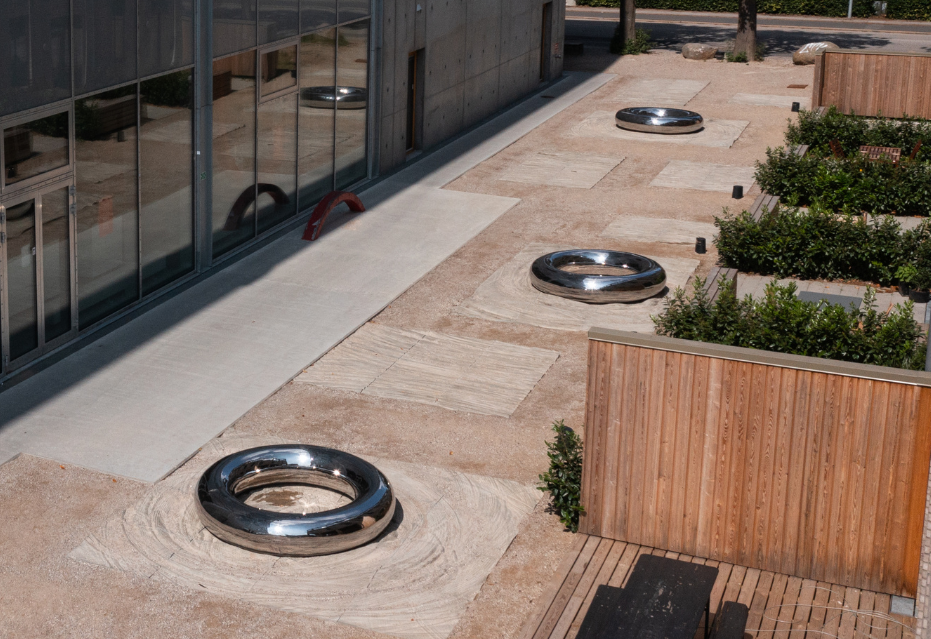
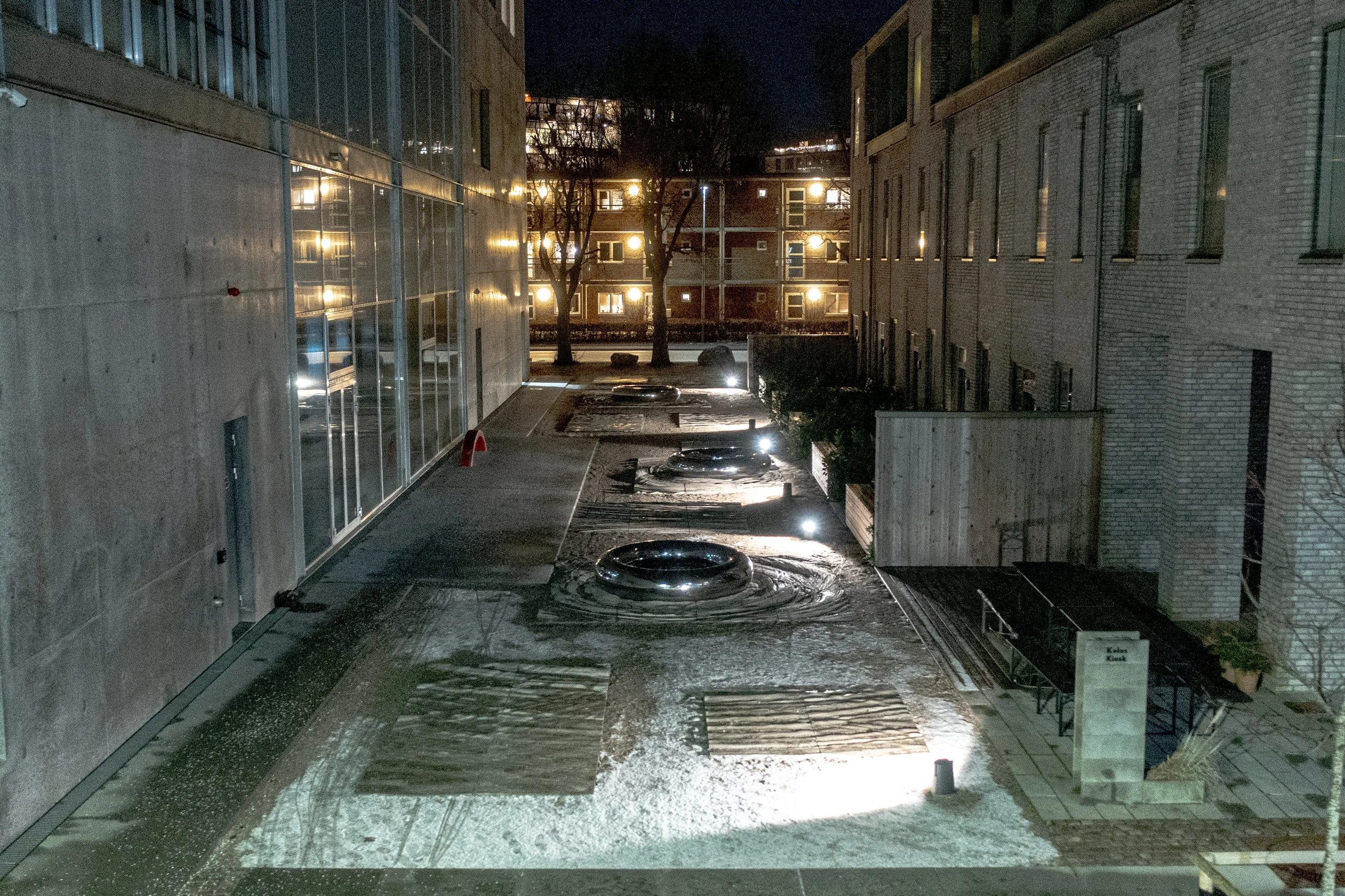
Behind the Aarhus School of Architecture, a former passageway has been transformed into an active social space for students and local residents. Here, an art installation addresses rising water levels caused by climate change while also functioning as everyday seating. The result is a site-specific work that combines visual impact with practical use.
Client
Aarhus School of Architecture
Project
Art project "New Ark" passage at Godsbanen Aarhus, Denmark
Design
Architects Simon Strøyer, Tideland Studio, Rasmus Romme Brick Maabjerg, Rumgehør Studio and artist Ajarose Stinee Solvild.
Photo
Niels Rysz Olsen
New Ark as Functional Public Art
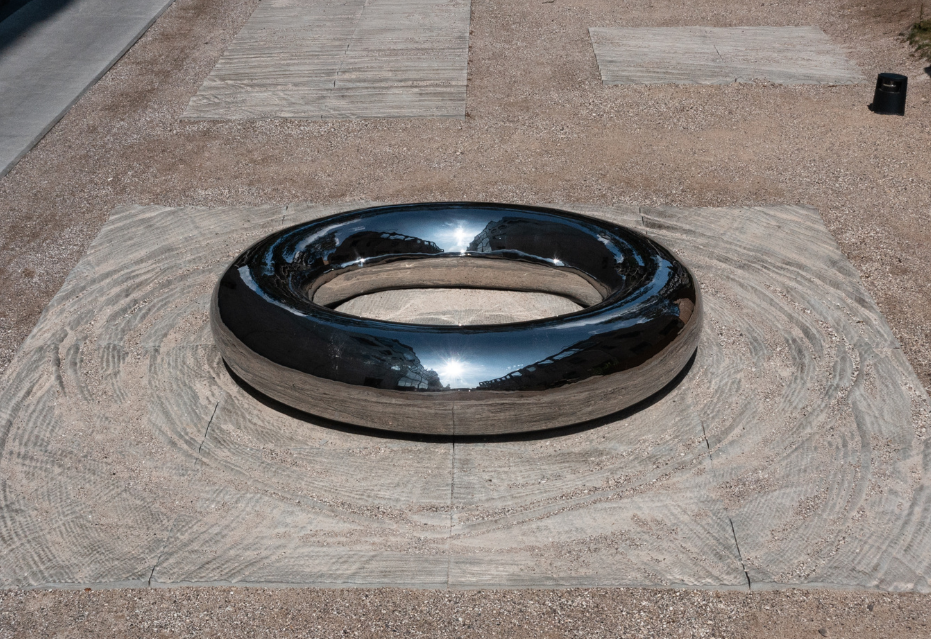
The project, titled New Ark, consists of three mirror-polished lifebuoys handcrafted in stainless steel. The oversized rings measure approximately two metres in diameter and are placed as a clear reference to potential future water levels. At the same time, they are designed to be used, turning the installation into a seating area where visitors can pause, meet and engage with the work through everyday interaction.
Concrete Tiles Creating Water Ripples
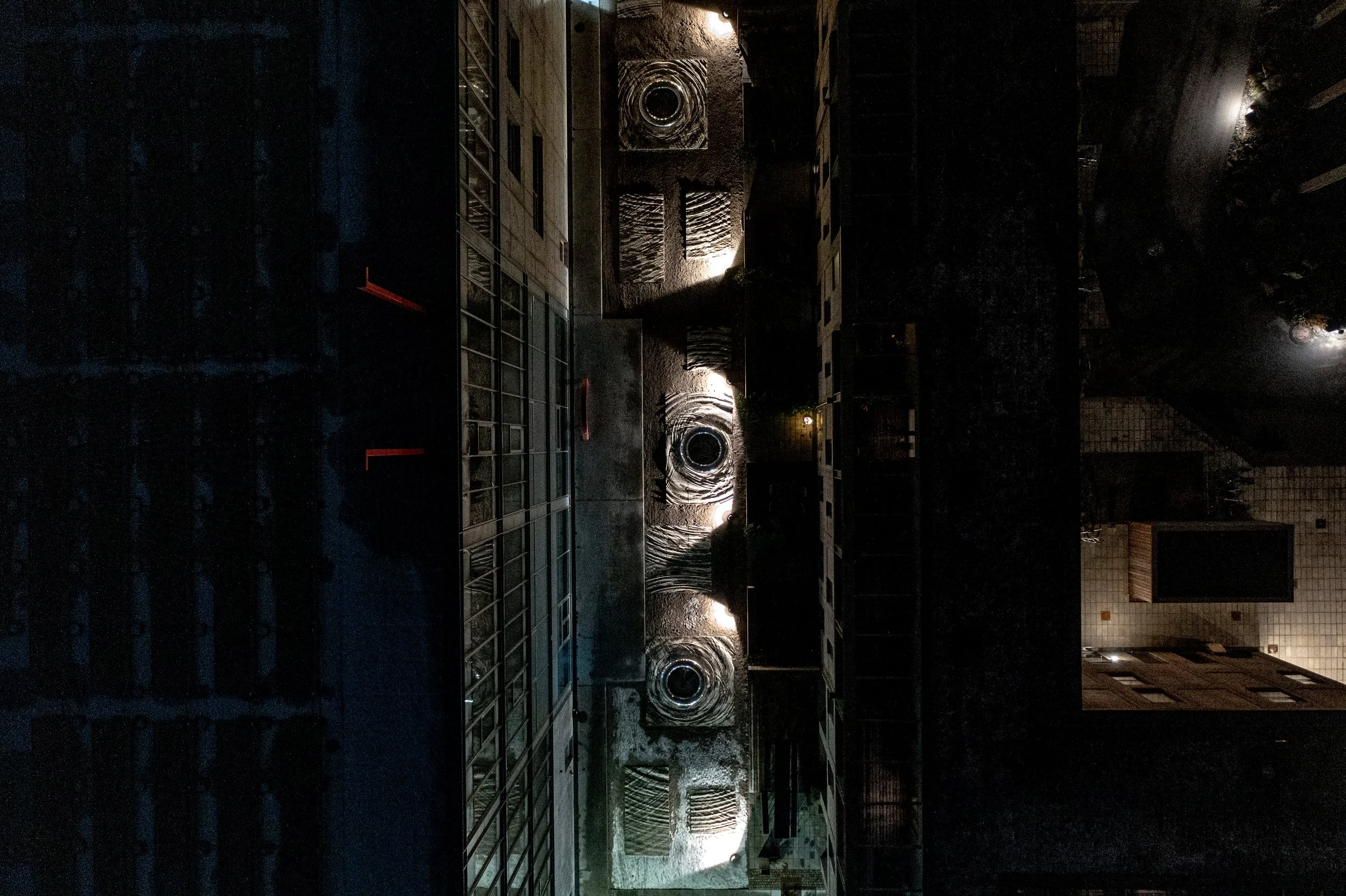
More than 100 unique concrete tiles surround the lifebuoys, forming a textured ground surface. The tiles are shaped to simulate ripples in rising water, and rainwater naturally settles in the reliefs. This strengthens the theme of water levels through real, visible effects in the surface. The tile field adds detail, variation and a strong sense of place, connecting the installation to its outdoor setting and the passageway’s new role as a shared social space.
Technical Drawings and Precise Production
To produce the mirror-polished lifebuoys accurately, advanced technical drawings were required. The rings were developed with a steel structure and carefully finished to achieve the desired reflective surface. Every detail had to be customised to ensure a precise result, both in appearance and in how the rings function in public use. The technical development supported the project’s high level of detailing and ensured that the lifebuoys could be produced and installed exactly as intended.


Durability, Load and Award Recognition
Because the rings are used as seating furniture, extensive product maturation was needed to ensure durability and safety. Material use was optimised to balance cost, material waste and expected load, while still achieving the intended look and finish. The completed installation has won the City Architect’s Special Award at the Aarhus Architecture Awards and stands as a strong example of how climate awareness, craftsmanship and public use can be combined in one coherent work.